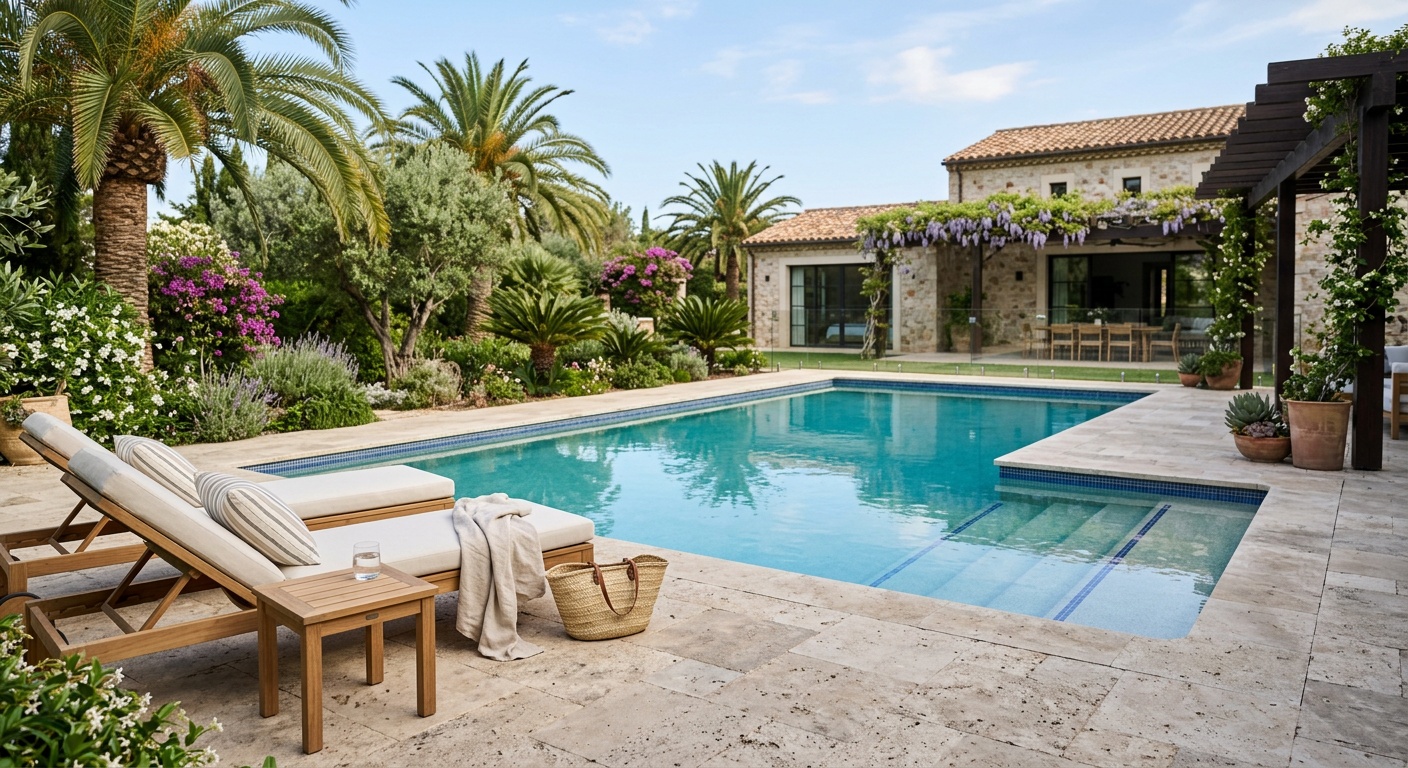
How a New Roof or Pool Can Increase Your Home’s Value in 2026
Reading time: 8 minutes
Thinking about sinking tens of thousands of dollars into a new roof or a backyard pool? You’re probably wondering one thing: will this actually pay off, or am I just building myself a very expensive hole in the ground? Let’s dig into the real numbers, the real trade-offs, and the real strategy behind two of the most debated home upgrades of 2026.
Table of Contents
- Why Roofs and Pools Are the Hot Topic of 2026
- The New Roof Advantage
- The Swimming Pool Question
- Roof vs. Pool: A Side-by-Side Comparison
- Real-World Case Studies
- Common Challenges (and How to Overcome Them)
- Frequently Asked Questions
- Your Roadmap Forward
Why Roofs and Pools Are the Hot Topic of 2026
Home values have shifted dramatically over the past few years, and buyers in 2026 are more selective than ever. With mortgage rates hovering around 6.4% and inventory slowly recovering, appraisers and buyers alike are scrutinizing big-ticket features closely. According to the 2026 Cost vs. Value Report from Remodeling Magazine, exterior projects continue to outperform interior ones in return on investment, and roofing sits near the top of that list year after year.
Pools, on the other hand, remain the wildcard. They’re polarizing—some buyers see a resort, others see a liability. Well, here’s the straight talk: neither upgrade is automatically a “good investment.” It depends on your climate, your local buyer pool, and how well the project is executed.
The New Roof Advantage
Roofs are unglamorous, but they’re arguably the single most influential feature affecting a home’s perceived value. A leaking, sagging, or visibly aged roof is a red flag that sends buyers running—or slashing their offers.
What the Data Says About Roof ROI
The 2026 national averages show that a mid-range asphalt shingle roof replacement costs approximately $31,500 and recoups about 68% of that cost at resale, according to remodeling industry benchmarks updated for this year. In markets with extreme weather—think hurricane-prone Florida or hail-heavy Texas—that recoup rate often climbs above 75%, because buyers are willing to pay a premium for peace of mind.
Real estate appraiser Denise Whitfield, who’s been valuing homes in the Southeast for over 15 years, puts it this way: “A roof older than 15 years doesn’t just lower value—it can disqualify a buyer’s financing entirely. Lenders are getting stricter about roof condition in 2026 because insurers are getting stricter too.” That’s a critical point: it’s not just about resale value anymore, it’s about whether a sale can even close.
Materials Matter More Than Ever
Metal roofing has surged in popularity this year, driven by rising insurance premiums tied to storm damage. While a metal roof costs roughly 2-3 times more than asphalt upfront, it can last 40-70 years compared to asphalt’s 15-20, and several insurers now offer premium discounts of 10-25% for impact-resistant materials. If you’re in a wildfire or hail zone, this isn’t a luxury upgrade—it’s becoming a practical necessity.
Quick Roof Checklist Before You Sell or Renovate
- Get a professional inspection—not just a visual walk-around
- Ask about insurance discounts for upgraded materials
- Match your roof style to neighborhood norms (don’t over-improve)
- Keep every warranty and receipt for future buyers
The Swimming Pool Question
Now for the fun—and controversial—one. Pools are an emotional purchase disguised as a financial decision. Unlike roofs, which almost universally add value, pools are highly situational.
Where Pools Pay Off (and Where They Don’t)
In warm-climate states like Arizona, Florida, and Southern California, a well-built in-ground pool can add 5-8% to a home’s value, particularly in neighborhoods where pools are the norm rather than the exception. But in colder regions—say, Minnesota or Vermont—a pool can actually be a turnoff. It signals extra maintenance, higher insurance costs, and a shorter usable season.
Industry data from the 2026 National Association of Realtors buyer survey suggests only about 34% of buyers nationwide say a pool would positively influence their offer, while nearly 20% say it would make them hesitant or lower their offer due to upkeep and liability concerns.
The Hidden Costs Nobody Talks About
Here’s the scenario nobody puts in the brochure: a basic in-ground pool installation in 2026 averages $58,000-$95,000 depending on region and materials, plus ongoing costs of $3,000-$5,000 annually for maintenance, chemicals, and repairs. Landscape architect Marco Delgado, who’s designed pools across Nevada and Southern California for two decades, notes: “Clients often forget that a pool is a subscription, not a one-time purchase. If you’re not staying in the home at least five more years, the math rarely works in your favor.”
Roof vs. Pool: A Side-by-Side Comparison
| Metric | New Roof | In-Ground Pool |
|---|---|---|
| Average Cost (2026) | $31,500 | $58,000-$95,000 |
| Typical ROI at Resale | 60-75% | 30-50% (climate dependent) |
| Annual Maintenance | $150-$400 | $3,000-$5,000 |
| Buyer Appeal (National) | Nearly universal | Regional, polarizing |
| Financing/Insurance Impact | Can affect loan approval | Can raise insurance premiums |
Visualizing Buyer Appeal by Region
Here’s a simplified look at how pool appeal shifts by climate zone, based on 2026 regional buyer sentiment surveys:
Real-World Case Studies
Case Study 1: The Roof That Saved a Sale. In early 2026, a homeowner in Charlotte, North Carolina, listed her 1998-built home for $410,000. Two buyers backed out after inspections flagged a 22-year-old roof nearing failure. She invested $27,000 in a new architectural shingle roof, relisted, and sold within 11 days for $418,000—$8,000 over asking, with the agent crediting the roof as the deciding factor for the winning buyer.
Case Study 2: The Pool That Didn’t Pay Off. A family in suburban Ohio spent $72,000 on a pool in 2023, hoping to boost resale value. When they sold in 2026, their appraiser noted the pool added minimal measurable value, and several prospective buyers explicitly asked if it could be removed or filled in due to liability concerns with young children. The home sold near market average, meaning the family recovered roughly 25% of their investment.
Case Study 3: The Combo Winner. A Scottsdale, Arizona homeowner replaced an aging roof and added a modest plunge pool simultaneously in 2025. Because pools are practically expected in that market, the combined $110,000 investment contributed to a sale price increase of nearly $95,000 over comparable non-pool homes nearby—demonstrating that context is everything.
Common Challenges (and How to Overcome Them)
Challenge 1: Overspending on the Wrong Upgrade
Many homeowners assume bigger is better. It’s not. Get a comparative market analysis from a local agent before committing—understand what similar homes in your area actually sell for with and without these features.
Challenge 2: Timing the Investment Wrong
Installing a pool the year before you sell rarely recoups costs. If resale is your primary goal, prioritize the roof, which tends to pay off regardless of timing, and think of a pool as a lifestyle investment rather than a financial one.
Challenge 3: Ignoring Insurance and Financing Ripple Effects
Both upgrades affect more than curb appeal. A new impact-resistant roof can lower premiums; a pool can raise them and complicate buyer financing due to liability requirements. Talk to an insurance agent before you break ground on either project.
Frequently Asked Questions
Does a new roof really increase home value, or does it just prevent value loss?
Both. A new roof actively adds resale value—typically 60-75% ROI—while also preventing the steep value drops and financing complications that come with an aging or damaged roof. Think of it as offense and defense combined.
Is it ever worth installing a pool purely for resale value?
Rarely, unless you’re in a consistently warm climate where pools are a market expectation, like much of Arizona or Florida. In most other regions, pools should be viewed as a quality-of-life investment rather than a resale strategy.
Which upgrade should I prioritize if I can only afford one?
In almost every case, choose the roof. It has broader buyer appeal, better financing outcomes, lower maintenance costs, and a more predictable return, regardless of where you live.
Your Roadmap Forward
As we move deeper into 2026, home value decisions are increasingly shaped by climate resilience, insurance realities, and buyer caution—not just aesthetics. Here’s how to move forward with confidence:
- Step 1: Get a professional roof inspection this year, even if you’re not selling soon—early detection saves money.
- Step 2: Research your specific climate zone’s buyer sentiment before considering a pool.
- Step 3: Talk to an insurance provider about how each upgrade affects your premiums before committing.
- Step 4: If budget allows only one project, prioritize the roof for near-universal ROI.
- Step 5: If you do build a pool, budget for the full five-year maintenance cost, not just installation.
Home improvement isn’t about chasing trends—it’s about matching the upgrade to your market, your timeline, and your life. So, which investment fits your roadmap: the quiet confidence of a solid roof, or the bold statement of a backyard oasis?
About the Author
