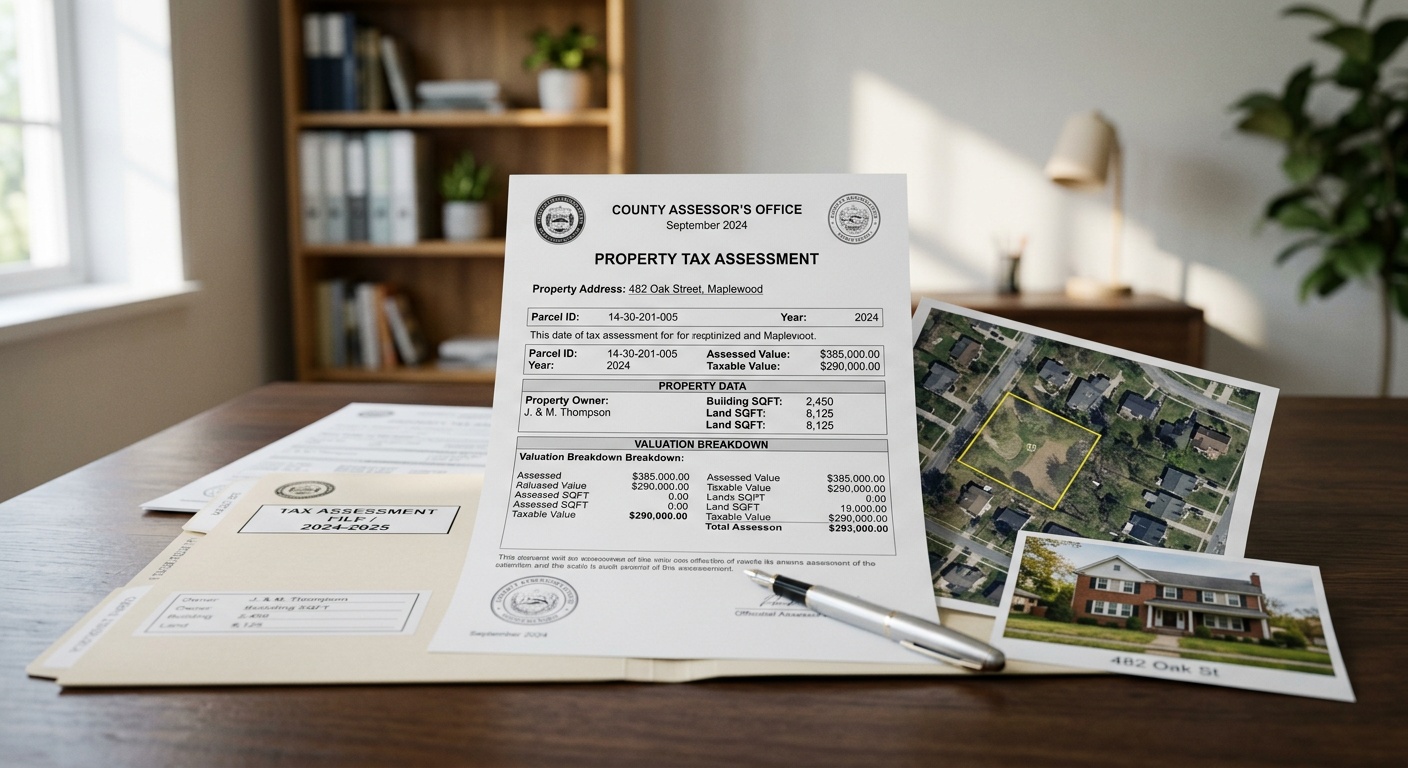
Understanding Taxable Value Versus Market Value of Your Home: A 2026 Homeowner’s Guide
Reading time: 9 minutes
You open your 2026 property tax assessment and your stomach drops—or maybe you breathe a sigh of relief. Either way, you’re probably confused. Why does the county say your home is worth $340,000 when the real estate agent down the street just told you it would sell for $425,000? You’re not imagining a mistake. You’re staring at the difference between taxable value and market value, two numbers that rarely match and often confuse even seasoned homeowners.
Table of Contents
- The Basics: Two Different Numbers, Two Different Jobs
- Why the Gap Exists (And Why It’s Growing in 2026)
- Real-World Scenarios
- Side-by-Side Comparison
- Visualizing the Value Gap
- Common Challenges and How to Solve Them
- Frequently Asked Questions
- Your Roadmap Forward
The Basics: Two Different Numbers, Two Different Jobs
Let’s clear up the confusion right away: market value is what a willing buyer would pay a willing seller in today’s market—it’s fluid, emotional, and driven by comparable sales, location trends, and even curb appeal. Taxable value (sometimes called assessed value) is a government-calculated figure used strictly to determine your property tax bill. It’s often lower than market value because most jurisdictions apply assessment ratios, caps, or lag periods that intentionally soften the number.
Here’s the straight talk: your county assessor isn’t trying to lowball or overcharge you personally. They’re applying a formula—often mandated by state law—that may not reflect this month’s hot housing market at all.
How Market Value Gets Determined
Appraisers and real estate agents calculate market value using the sales comparison approach, looking at recently sold, similar homes nearby. In 2026, with mortgage rates hovering around 6.3% according to Freddie Mac’s January data, many markets are seeing slower turnover, which means fewer comparable sales and more volatility in perceived value from one neighborhood to the next.
How Taxable Value Gets Determined
Taxable value typically starts with an assessor’s estimate of market value, then applies:
- An assessment ratio (e.g., 35% to 100% of market value, depending on state)
- Homestead exemptions for primary residences
- Assessment caps that limit annual increases (California’s Proposition 13 caps growth at 2% annually, for example)
- A reassessment cycle, which might occur annually, every two years, or only when the property sells
Why the Gap Exists (And Why It’s Growing in 2026)
Quick Scenario: Imagine you bought a home in 2019 for $250,000. By 2026, comparable homes are selling for $410,000 because of persistent post-pandemic migration into your suburb. But because your state caps annual assessment increases at 3%, your taxable value has only crept up to roughly $308,000. That’s a 34% gap between what the tax office says and what the market says.
This scenario is playing out across the country. According to the National Association of Realtors’ Q4 2025 report, median home prices rose 4.8% year-over-year, while many state assessment caps limited taxable value growth to 2-3%. The result? A widening gulf between the two figures, especially in high-demand metro areas like Austin, Tampa, and Boise.
As Dr. Elena Marsh, a property tax policy analyst, puts it: “Assessment caps were designed to protect homeowners from tax shock during rapid appreciation. But they also create long-term distortions—new buyers often pay taxes based on a fresh, higher assessment while long-term owners next door pay far less, even on similar homes.”
Real-World Scenarios
Case 1: The Long-Term Owner. Maria has owned her Phoenix home since 2015. Her market value in 2026 is estimated at $520,000, but thanks to Arizona’s limited property tax assessment growth rules, her taxable value sits at $365,000. Her tax bill remains manageable even as her equity has more than doubled.
Case 2: The New Buyer. James purchased a similar home on the same street in late 2025 for $505,000. Because many states reassess upon sale, his taxable value was reset close to his purchase price almost immediately—meaning he’s paying significantly more in property taxes than Maria, despite owning a comparable home.
Case 3: The Renovator. Priya added a $90,000 kitchen and primary suite addition to her home in 2025. Her market value jumped accordingly, but her taxable value only reflected the new construction after the local assessor’s office conducted a supplemental review in mid-2026—creating a temporary six-month lag where her tax bill didn’t yet reflect the upgrade.
Side-by-Side Comparison
| Metric | Market Value | Taxable Value |
|---|---|---|
| Purpose | Determines sale price potential | Determines property tax owed |
| Update Frequency | Real-time, fluctuates with market | Annually or per reassessment cycle |
| Who Calculates It | Appraisers, agents, buyers/sellers | County or municipal assessor |
| Typical 2026 Range | 100% of estimated fair value | 35%–90% of market value (state-dependent) |
| Growth Limits | None—driven by supply and demand | Often capped (e.g., 2-10% annually) |
Visualizing the Value Gap
Below is a simplified comparison of market value versus taxable value across four sample U.S. metro areas in early 2026, based on aggregated county assessor data and MLS averages.
Common Challenges and How to Solve Them
Challenge 1: Overpaying Due to Outdated Assessments
Sometimes taxable value doesn’t drop even when market value falls—like during localized slowdowns. If your neighborhood cooled off in 2025-2026 but your assessment didn’t adjust, you could be overpaying. Actionable tip: Request your assessor’s comparable sales data and file an appeal within your jurisdiction’s window, typically 30-60 days after your notice arrives.
Challenge 2: Confusing Taxable Value With Sale Price Expectations
Sellers sometimes anchor their listing price to taxable value, either overestimating or underestimating their home’s worth. Actionable tip: Always get a comparative market analysis (CMA) from a licensed agent or a formal appraisal before listing—never rely on the tax assessment as a pricing guide.
Challenge 3: Missing Exemptions That Lower Taxable Value
Homestead, senior, veteran, and disability exemptions can meaningfully reduce your taxable value, yet many eligible homeowners never apply. Actionable tip: Check your county assessor’s website annually—exemption rules and deadlines shift, and in 2026 several states expanded senior freeze programs to combat rising tax burdens.
Frequently Asked Questions
Does a higher market value automatically mean higher property taxes?
Not immediately. Taxable value usually lags behind market value due to assessment caps and reassessment schedules. Your taxes will likely rise eventually, but often gradually rather than in one dramatic jump.
Can I use my taxable value to negotiate a lower purchase price?
It’s not a strong negotiating tool on its own since taxable value often underrepresents true market conditions. Use recent comparable sales and a professional appraisal instead—those carry far more weight in negotiations.
What should I do if I think my taxable value is wrong?
File a formal appeal with your local assessor’s office. Gather evidence like recent comparable sales, photos showing property condition issues, or an independent appraisal. Most jurisdictions have a specific appeal window each year, so mark your calendar when your assessment notice arrives.
Your Roadmap Forward
Understanding the difference between taxable value and market value isn’t just academic—it directly affects your wallet, your selling strategy, and your long-term financial planning. As 2026 housing markets continue adjusting to higher borrowing costs and shifting migration patterns, the gap between these two numbers will likely keep evolving in ways that reward informed homeowners.
Here’s your practical checklist to stay ahead:
- Review your assessment notice the moment it arrives—don’t let appeal deadlines slip by.
- Pull recent comparable sales in your area at least once a year, even if you’re not selling.
- Apply for every exemption you’re eligible for—homestead, senior, veteran, or disability.
- Separate your pricing strategy from your tax bill when buying or selling—use appraisals and CMAs, not assessments.
- Track local assessment cap rules, since these vary dramatically by state and directly shape your long-term tax trajectory.
So, the next time your assessment notice and your neighbor’s “for sale” sign tell two different stories about your home’s worth, you’ll know exactly why—and exactly what to do about it. What will you check first: your exemption status, or your last comparable sale?
About the Author
